

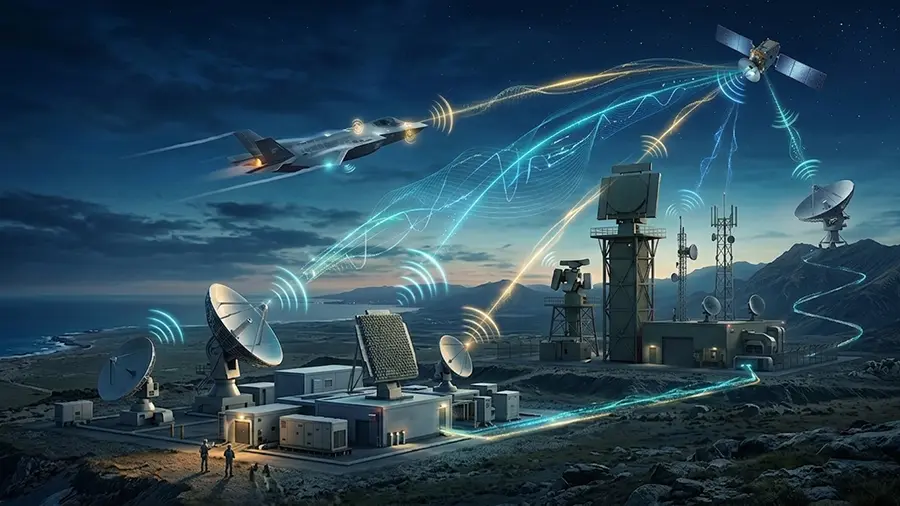
In the fast-changing world of wireless communication, aerospace, and defence, antennas remain the invisible force that connects systems, people, and machines. Every RF pulse that secures an airspace, every satellite that bridges continents and every Telecommunication tower that fuels our digital lives depends on an antenna performing exactly as intended. The quality of these antennas isn’t a matter of convenience; it is the very backbone of reliability and safety.
But ensuring that antennas meet the highest standards is far from simple. As technologies evolve, antennas have grown increasingly complex. They are now multi-functional, supporting multiple bands, and often integrated into intricate platforms where failure is not an option. Testing, therefore, cannot remain a static, manual process. It must evolve into something as sophisticated and precise as the systems antennas serve.
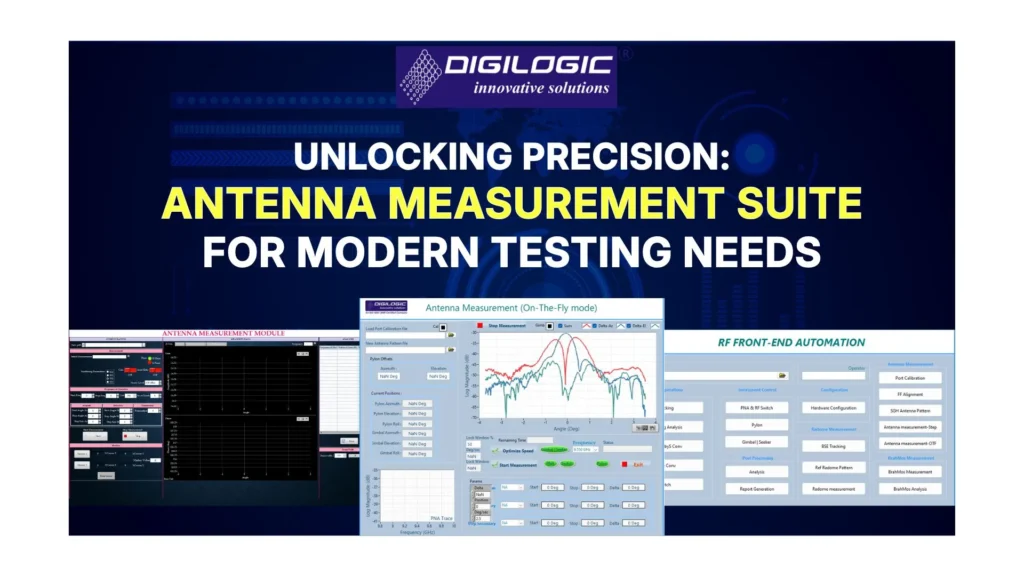
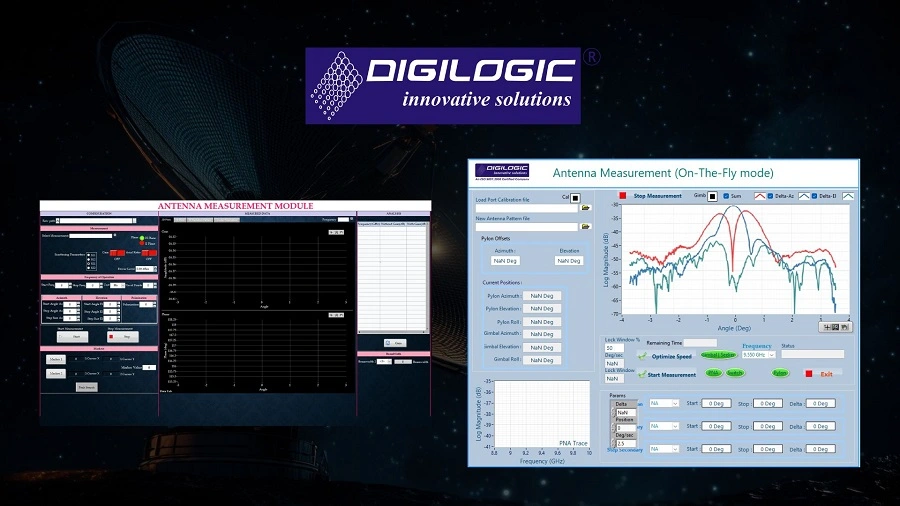
This is where the Antenna Measurement Suite (AMS) steps in, a platform that transforms how antennas are evaluated, blending near-field and far-field techniques with automation and comprehensive performance analysis. At its core lies a single goal: to give engineers, researchers, and organizations the confidence that every antenna deployed in the field will perform as designed.
The Shift from Traditional to Advanced Testing
For decades, antenna testing was a painstakingly manual endeavor. Engineers would set up test ranges, rotate antennas step by step, and collect data over long cycles. The process was not only time-intensive but also vulnerable to errors, particularly when antennas had to be tested across multiple frequencies, orientations, and polarizations.
The demands of today’s environment simply do not allow for that. Antennas need to be validated faster, across wider frequency bands, and with greater accuracy. Performance margins are narrower, and compliance requirements are stricter. What once took weeks now needs to be accomplished in days or sometimes hours.
AMS embodies this evolution. It integrates sophisticated measurement techniques, advanced data processing, and automation into a single, cohesive system. The result is a testing experience that is both efficient and uncompromising in precision.
Near-Field Testing: Precision in Compact Spaces
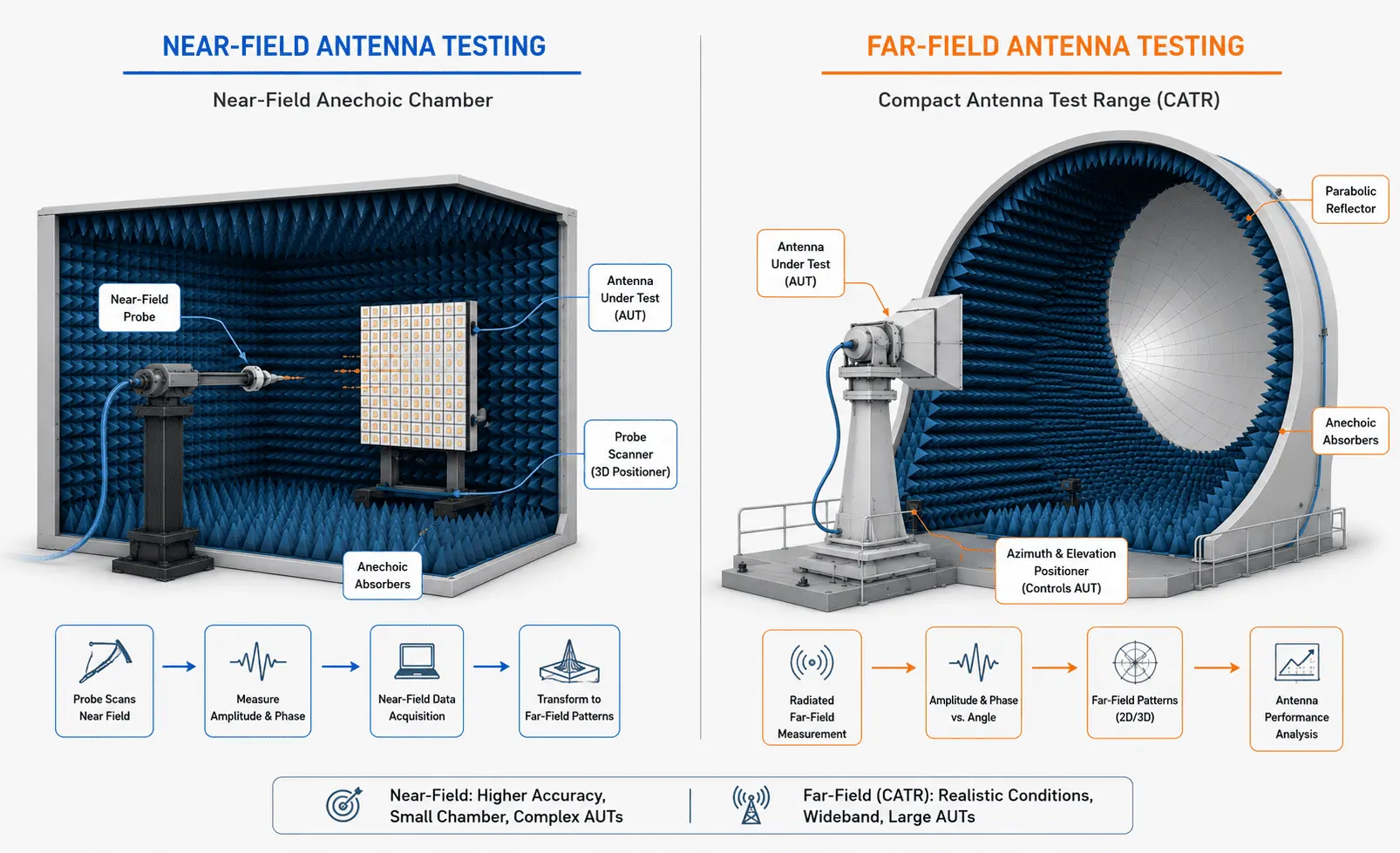
One of the cornerstones of AMS is near-field testing, a method particularly valuable for high-frequency antennas, phased arrays, and electrically large apertures where traditional far-field ranges are impractical. Rather than measuring across vast open distances, near-field testing captures electromagnetic fields close to the antenna and mathematically reconstructs far-field radiation patterns through Near-to-Far-Field Transformation (NFFT), implemented via Fourier-based or modal expansion algorithms applied to measured amplitude and phase data.
Depending on the antenna’s radiation characteristics, engineers choose between three scan geometries: planar scanning for directive antennas with a defined main beam, cylindrical scanning for wider angular coverage, and spherical scanning for full 3D characterization of broad or omnidirectional radiators. AMS supports all three, ensuring the scan geometry always matches the antenna under test.
By pairing automated scanning with advanced NFFT algorithms, AMS delivers data that is accurate and consistently repeatable. Engineers can visualize beam patterns, assess radiation efficiency, validate polarization purity, and analyze side-lobe behavior, entirely within a controlled, interference-free facility.
Far-Field Testing: Bringing the Real World Indoors
Antennas operate in open space, where true performance is defined by how signals radiate across distance. Far-field testing captures this directly, providing measurable insight into gain, directivity, beam shape, and radiation efficiency under conditions that reflect real-world deployment.
Historically, the challenge has been physical scale. Large antennas require test distances satisfying the Fraunhofer far-field criterion, often stretching hundreds of meters, making open-range setups costly and weather-dependent. Compact Antenna Test Ranges (CATR) resolve this by using a precision reflector, typically an offset parabolic design with dual-reflector Cassegrain and Gregorian configurations used in advanced ranges, to convert spherical wavefronts into plane waves, simulating far-field conditions within a fraction of the physical distance.
AMS integrates seamlessly into both traditional and compact far-field environments. Automated positioning systems precisely control azimuth and elevation orientations while high-dynamic-range receivers capture amplitude and phase across the full angular sweep — eliminating manual variability and delivering repeatable, deployment-ready results across terrestrial, airborne, and orbital applications.
Automation: Redefining Efficiency
The state-of-the-art element of AMS lies in its automation capabilities. In the past, testing dozens of antennas meant repeating the same tedious procedures again and again; aligning, rotating, recalibrating, and recording data. The risks of human error were ever-present, and the sheer time involved made scaling difficult.
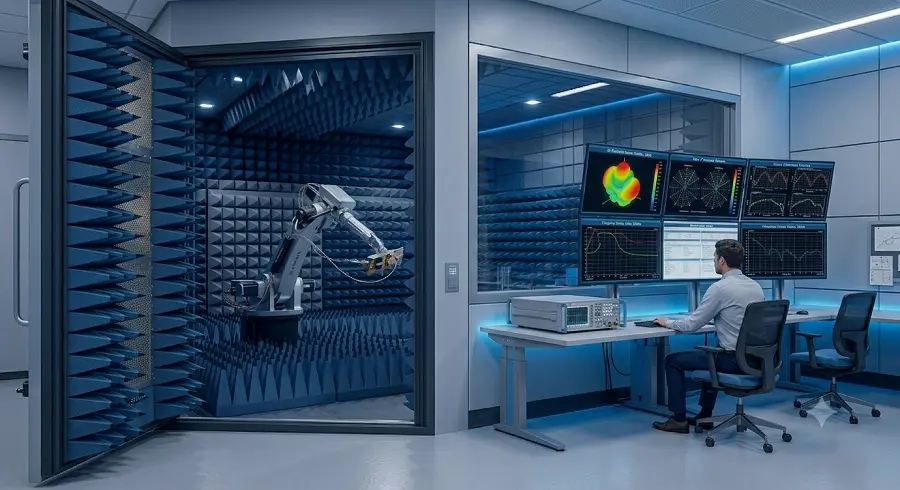
Automation turns this challenge into an opportunity. With AMS, antennas can be positioned, aligned, and tested automatically according to predefined scripts. Electromechanical positioners ensure precise orientation, while software sequences cover multiple frequencies, polarizations, and measurement types in a single run. Real-time data processing provides instant feedback, allowing adjustments to be made without delay.
This not only reduces the burden on engineers but also dramatically improves throughput. In production environments where hundreds of antennas must be validated each week, automation ensures consistency and speed without compromising quality. In research labs, it frees up valuable time to focus on design and innovation rather than repetitive testing tasks.
Comprehensive Performance Testing: Looking Beyond the Basics
While beam patterns and gain often dominate discussions around antenna testing, true performance evaluation goes much deeper. An antenna’s effectiveness depends on how well it matches impedance, maintains polarization, operates across bandwidths, and radiates efficiently.
AMS consolidates these evaluations into a single platform. Engineers can measure everything from return loss and VSWR to bandwidth and efficiency, alongside more familiar metrics such as radiation patterns and directivity. The suite’s reporting features provide not just raw data but actionable insights, helping teams optimize designs, troubleshoot issues, and prepare for compliance certifications. This holistic approach is what transforms testing from a checkbox exercise into a meaningful step in product development and deployment.
From Research Labs to Production Floors
What makes the Antenna Measurement Suite truly versatile is its ability to serve both ends of the spectrum: the exploratory world of R&D and the high-volume demands of production.
In research labs, the suite provides advanced analysis tools and customizable test configurations that allow engineers to experiment, refine, and innovate. Data visualization features offer a deep dive into performance, enabling faster iterations and more confident design decisions.
On the production floor, the same suite scales seamlessly into an environment where speed and consistency matter most. Automated test cycles minimize human intervention, integrated automated reporting streamlines documentation, configuration files are saved, and the reliability of results ensures that every unit leaving the line meets the same high standards.
This dual capability means organizations don’t need separate tools for development and manufacturing; one suite bridges the entire lifecycle.
Digilogic Systems Perspective
At Digilogic Systems, the vision has always been clear: to simplify complexity while enhancing reliability. The Antenna Measurement Suite reflects that ethos, offering organizations a way to test smarter, faster, and with greater assurance.
We stand to deliver tools engineers can rely on, day after day, to make informed decisions about the systems they design and deploy. By combining near-field and far-field testing, automating workflows, and unifying performance evaluations, AMS provides a foundation of confidence that supports industries where reliability is paramount.
Conclusion
Antenna performance in the field is paramount to every call made, every mission secured, and every network sustained. Ensuring that performance requires more than just measurements; it requires precision, efficiency, and adaptability.
The Antenna Measurement Suite by Digilogic Systems embodies these qualities. It takes the complexity of antenna testing and transforms it into a process that is streamlined, accurate, and future-ready. Whether in the controlled environment of a lab or the fast-paced demands of production, AMS is not just a solution, it is an enabler of innovation and reliability.